
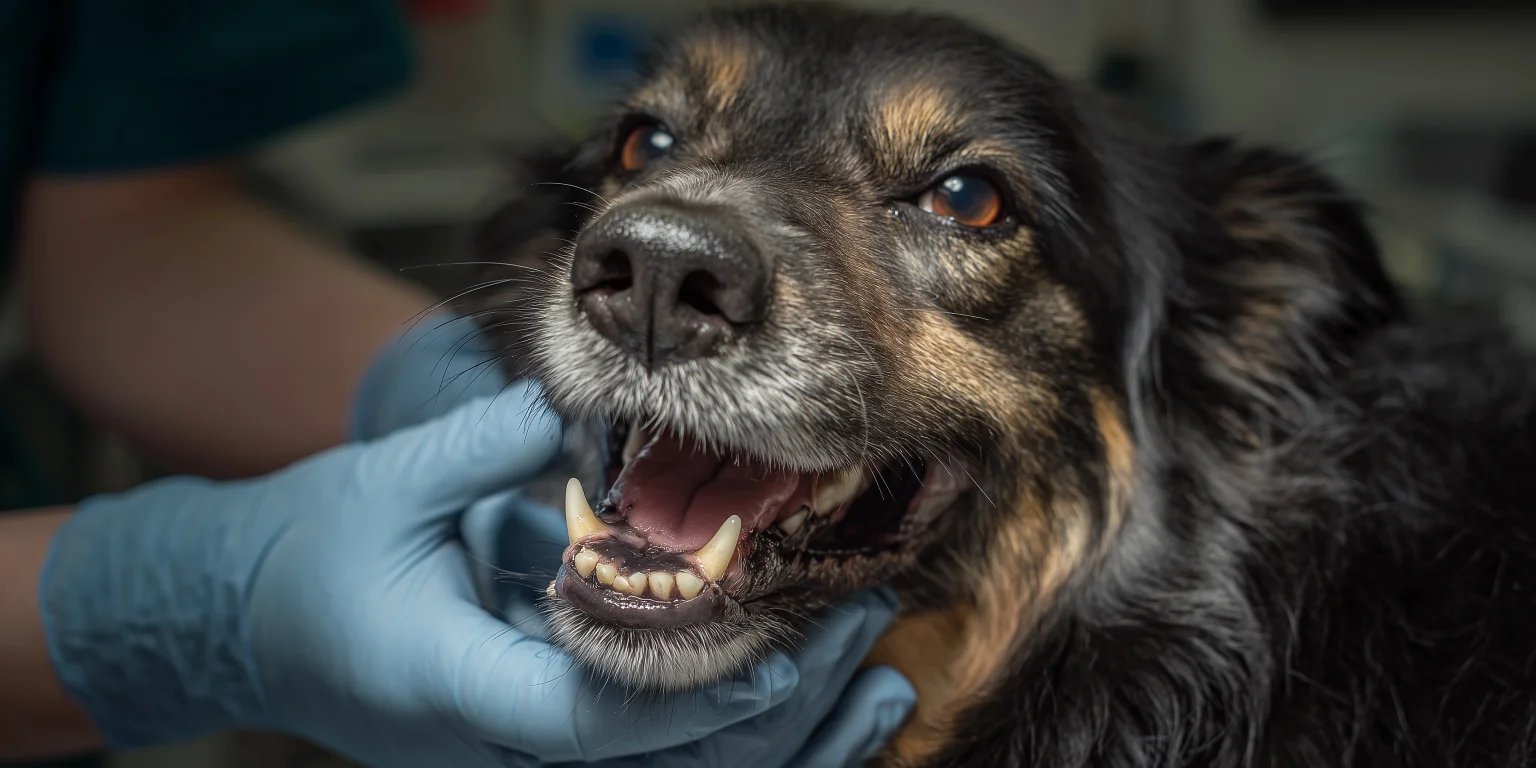
Bad breath is often the first sign of dental disease, but the real damage occurs below the gumline where painful infections, tooth root abscesses, and bone loss can develop undetected. Regular professional dental care, combined with at-home prevention, keeps your pet’s mouth healthy and prevents serious complications.
What is Dental Disease?
Dental disease, also known as periodontal disease, is caused by the accumulation of plaque on your pet’s teeth. Plaque is a sticky film composed of bacteria, saliva, and food particles. If not removed, plaque hardens into calcite (tarite), which irritates the gums and provides a breeding ground for harmful bacteria.
As the disease progresses, bacteria multiply in the groove around each tooth, causing inflammation and destruction of the periodontal ligament that anchors the tooth in its socket. Left untreated, this leads to painful infections, loose teeth, and bone loss. Bacteria can also enter the bloodstream and affect other organs including the heart, liver, and kidneys.
Gingivitis vs Periodontitis
In the early stages, dental disease causes gum inflammation known as gingivitis. Gingivitis is reversible with professional cleaning and improved home care. However, once the disease progresses to periodontitis — where the periodontal ligament and bone are affected — the damage is permanent. Early intervention is essential to prevent irreversible damage.
Signs of Dental Disease
Watch for these warning signs that may indicate your pet has dental disease:
-
- Bad breath (halitosis): Often the first noticeable sign of dental problems
- Discoloured teeth: Yellow or brown buildup on the tooth surface
- Red or swollen gums: Inflammation along the gumline
- Loose or missing teeth: Advanced disease weakens tooth attachment
- Difficulty eating: Dropping food, reluctance to chew, or avoiding hard food
- Excessive drooling: May be blood-tinged in severe cases
- Pawing at the mouth: Indicates oral pain or discomfort
- Facial swelling: May indicate a tooth root abscess
- Behavioural changes: Lethargy, irritability, or reluctance to be touched around the head
If you notice any of these signs, contact our Maffra vet to arrange a dental examination.
Dental Care Options at Gippsland Veterinary Hospital
We offer flexible options for your pet’s dental care, whether you prefer a one-off treatment or ongoing preventative care.
Standalone Dental Treatment
Book a professional dental treatment as a single procedure at Gippsland Veterinary Hospital. Our comprehensive dental service includes:
- Pre-operative health assessment
- General anaesthesia with intravenous fluids
- Full dental examination and charting
- Dental x-rays to assess tooth roots and bone
- Professional scaling to remove plaque and calculus
- Polishing to smooth tooth surfaces
- Extractions if required (additional cost may apply)
- Home care advice and follow-up recommendations
Dental Care with Best Mates
Best Mates is our annual wellness membership for dogs and cats, covering essential preventative care at participating Apiam Vet Clinics Australia-wide.
Members who select the Dental package receive a comprehensive scale and polish — including x-rays and dental charting — as part of their membership. This is one of three package options, alongside Desexing and Parasite Prevention. Unlimited standard consultations* are included for all members, so early signs of dental disease can be assessed promptly. Extractions and additional treatments are charged separately, with a 10% member discount.
View all Best Mates inclusions | Membership starts at $875/year | T&Cs apply
*20-minute consultations during clinic hours, subject to availability. Excludes after-hours, specialists, and house calls.
The Professional Dental Procedure
A professional dental treatment is performed under general anaesthesia, allowing our veterinary team to thoroughly examine, clean, and treat your pet’s teeth safely and without discomfort.
- Pre-Anaesthetic Assessment: Your pet receives a full health check to ensure they are fit for anaesthesia. We may recommend blood tests, particularly for older pets or those with existing health conditions.
- Anaesthesia and Monitoring: Your pet is placed under general anaesthesia. A dedicated veterinary nurse monitors heart rate, breathing, oxygen levels, and temperature throughout the procedure.
- Dental Examination and Charting: Each tooth is examined and any abnormalities recorded on a dental chart. This creates a permanent record of your pet’s oral health.
- Dental X-rays: X-rays reveal problems beneath the gumline that cannot be seen during a visual examination, including tooth root abscesses, bone loss, and hidden fractures.
- Scaling: Ultrasonic scaling removes plaque and calculus from tooth surfaces, both above and below the gumline.
- Polishing: Teeth are polished to smooth the enamel surface, making it harder for plaque to accumulate.
- Extractions (if needed): Teeth that are fractured, loose, or severely diseased may need to be removed to prevent ongoing pain and infection.
- Recovery: Your pet is moved to a warm recovery area and monitored closely as the anaesthesia wears off. Most pets go home the same day.
Preventing Dental Disease at Home
Professional dental treatment addresses existing disease, but ongoing home care is essential to maintain your pet’s oral health between veterinary visits.
Tooth Brushing
Daily brushing is the gold standard for preventing plaque buildup. Use a pet-specific toothbrush and toothpaste — never use human toothpaste as it contains ingredients that are toxic to pets. Start slowly and make it a positive experience with praise and rewards.
Dental Diets
Prescription dental diets feature larger kibble with a fibrous texture that helps scrub teeth as your pet chews. These diets may also contain ingredients that help reduce plaque formation.
Dental Chews and Treats
Dental chews can help reduce plaque and tartar buildup between brushings. Look for products with the Veterinary Oral Health Council (VOHC) seal of approval, which indicates they have been tested and proven effective.
Regular Check-ups
Include a dental examination as part of your pet’s annual health check. Early detection of dental disease allows for prompt treatment before significant damage occurs. Best Mates members benefit from unlimited consultations, making it easy to have dental concerns assessed promptly.
Common Dental Conditions
Tooth Root Abscess
A tooth root abscess occurs when bacteria infect the root of a tooth, causing a painful pocket of pus to form. In dogs, the upper premolar (carnassial tooth) is commonly affected, often presenting as swelling below the eye. Treatment typically requires extraction of the affected tooth.
Fractured Teeth
Chewing on hard objects such as bones, antlers, or rocks can fracture teeth. A fractured tooth may expose the sensitive pulp, causing pain and allowing bacteria to enter. Depending on the severity, treatment may involve extraction or root canal therapy.
Feline Tooth Resorption
Tooth resorption is a painful condition affecting up to 60% of cats over five years of age. The tooth structure breaks down, often starting at the gumline. Affected teeth are usually extracted to relieve pain.
